
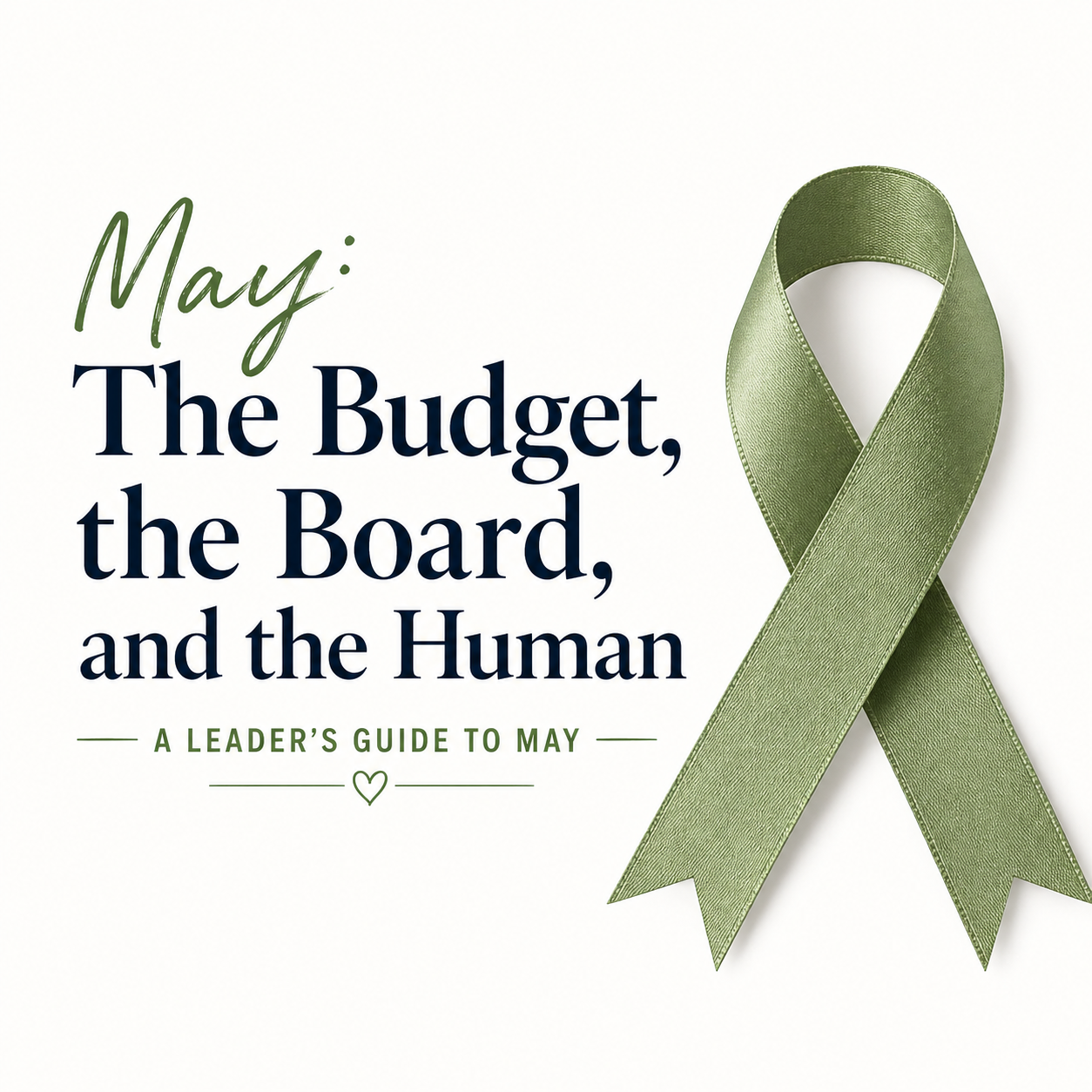
We’re in May, and two distinct rhythms are converging for leaders. On one hand, we are in Mental Health Awareness Month - the panels, the ribbons, and the public statements. On the other, we are in the thick of fiscal year budget planning . For 25+ years, I’ve sat in those Cabinet meetings and strategy sessions. I’ve navigated the politicking of position value and the data-driven pressure of assessment-defined budgeting. I know the unique exhaustion of "friendraising" in a transactional world and the frustration of being managed by those who don’t quite grasp the complexity of the work. In that high-pressure intersection of mission and money, mental health often gets relegated to a "wellness initiative." But the most recent data from NAMI is telling us something we can no longer ignore: Intentionality is our only path forward. The Data Behind the Intent According to recent NAMI workforce insights, the gap between what we say and what we do is where we lose our best people. While most employees believe mental health should be discussed at work, a staggering majority still don't feel comfortable bringing it to senior leadership. They see the "Awareness Month" emails, but they don't see it reflected in the culture of the division or the structure of the budget. We cannot lead an organization toward health if we are running on empty ourselves. Performance is a short-term strategy; alignment is the long-term solution. Why I’m Heading Back to the Books (and Back to You) This realization is the heartbeat of my "Second Chapter." I am currently pursuing an advanced degree in Clinical Mental Health Counseling (CMHC). Yes, a clinical counselor, psychotherapist. I’m not doing this to step away from the executive world. I’m doing it to step deeper into it. I’ve lived the C-suite. I’ve managed the multimillion-dollar budgets and the campus-wide crises from the North to the South, East to West. I know that when a leader is struggling, they don’t just need a therapist - they need someone who "gets" the fiduciary weight they carry. I’m earning this degree to be the bridge. I want to help seasoned executives see the light, not by judging the pressure they face, but by helping them navigate it with clinical tools I wish I’d had 20 years ago. Help Me Help You: Making it Real for 2027 As you finalize your plans for the next fiscal year, I want to offer a "help me help you" approach to mental health. Let’s move past the performative and toward the intentional. Audit the Culture, Not Just the Spreadsheet: Before we advocate for "Mental Health for All," we have to look inward. Are we modeling the boundaries we want our teams to have? Budget for the Human, Not Just the Role: Is there room in the 2027 plan for actual support, professional development, and the psychological safety required to keep your top talent from burning out? Recognize the Gap: Understand that the isolation at the top is real. You don't have to carry the "Executive Mask" alone. My clinical mental health counseling journey is about ensuring that the next time a leader looks for support, they find someone who speaks their language. Someone who knows that your "budgeting conversation" is actually a conversation about the people you serve. This May, let’s do more than just raise awareness. Let’s start the intentional work - on our organizations, and on ourselves. A Final Thought for May: I’ve been in your seat. I know the weight of the decisions you’re making right now. If you’re ready to move from performance to true, healthy leadership, let’s talk. The light is a lot closer than it looks.
There is a date each year that does not show up on my calendar publicly. No celebration. No announcement. No dramatic reflection. But I know when it arrives. It marks a season in my life when my mental health unraveled in ways I never imagined possible. A season when pressure, silence, expectation, and isolation converged. A season that included suicidal ideation. I do not revisit the details here. Not because I am hiding them. Because this space is not about reliving the moment. It is about what followed. What matters is this. I am still here. Clearer. Stronger. More deliberate. Not because time passed. Because I did the work. What I learned about pressure High performers normalize pressure. Leaders normalize it even more. We rationalize intensity. We absorb dysfunction. We tell ourselves to push through. There is a cost when environments reward output and ignore humanity. There is a cost when culture confuses resilience with silence. I learned that firsthand. Not because I was weak. Because I was committed. Because I cared. Because I believed I could carry more than I should have. That realization changed how I lead forever. Strength is not automatic We often hear that adversity makes us stronger. That statement is incomplete. Adversity does not strengthen you. What you build afterward does. Strength is not surviving the moment. Strength is rebuilding your internal foundation so the moment does not define you. Strength is therapy. Strength is accountability. Strength is learning boundaries you should have had earlier. Strength is unlearning environments that equate exhaustion with excellence. Strength is choosing to live aligned even after you have seen the edge. The quiet pride of doing the work I am not ashamed. The work I did was not performative. It was not branding. It was survival, healing, and growth done privately and consistently. Years later, the pride I feel is not dramatic. It is steady. I know my warning signs now. I know my capacity. I know my limits. I know the cost of ignoring them. And I refuse to ignore them again. That is what walking the talk means. If you want the full story I have shared the full journey in depth on podcasts where I was a guest. And on stages, lectures I have been an invited guest to share my story - hoping to make it to at least one person. In those conversations, I speak plainly about what happened, what led up to it, and what it took to rebuild. If you want to understand the context and the cost more fully, I encourage you to listen rather than read. Hearing the tone, the pauses, and the reflection matters. The story is not shared for shock value. It is shared to reduce stigma. It is shared so leaders understand that mental health does not discriminate by title. It is shared so others know they are not alone in private battles. You can find those conversations through my media & press page, as well as my linktr.ee For those who create pressure they never carry Many people in positions of influence do not fully grasp the impact of their tone, decisions, or silence. Not because they are malicious. Because they are unaware. Awareness does not erase impact. Culture shapes health. Leadership shapes culture. And pressure without humanity fractures people quietly. I do not dwell on who contributed to my breaking point. That is not where my power lives. My power lives in how I lead now. With clarity. With boundaries. With respect for the human cost of performance. What this anniversary represents Each year when this date arrives, I take inventory. Am I aligned? Am I steady? Am I protecting what matters? Mental well-being is not a campaign. It is not a slogan. It is not a quarterly initiative. It is daily discipline. It is knowing when to speak. When to pause. When to step away. When to say no. It is building environments where people can succeed without sacrificing themselves. That is the leadership I believe in. That is the leadership I practice. The truth What did not take me out did not automatically make me stronger. The work I chose afterward did. And that work continues. Quietly. Deliberately. With hope that leaders everywhere begin to understand the weight they place on others. Because when we lead well, people thrive. When we do not, the cost is real. This anniversary is not about survival. It is about steadiness. It is about power reclaimed. It is about walking the talk. And I am proud of that.

A commitment to steady leadership, thoughtful presence, and lasting impact

Looking back with honesty, staying committed to purposeful work.
Where gratitude meets growth and leadership becomes personal.

Autumn Leadership: The Quiet Shift Executives Often Miss

As August fades and September dawns, we find ourselves in that rare in-between - the denouement of summer and the on-ramp to fall. The air still carries warmth, but there’s an undercurrent of change. The days shorten, shadows lengthen, and the rhythm of nature shifts quietly beneath our feet. This is not yet the bold arrival of fall, nor the lingering fullness of summer - it is something more subtle, more liminal. And isn’t that exactly how mental health - and leadership - often works? True change rarely arrives in one dramatic moment. It happens in transition. In the slow turning of seasons. In the quiet noticing that things aren’t quite what they were, but not yet what they will be. For me, these last several months have carried that same spirit. Unexpected pauses. Redirections. New opportunities slowly forming out of old foundations. Coaching with executives who want to lead without losing themselves. Consulting with institutions navigating transitions. Speaking about mental health not as an “extra,” but as the foundation of culture and performance. And most recently, listening deeply to families who are navigating the hidden complexities of higher education. Like the shift from summer to fall, these moments don’t arrive with fanfare - but with a quiet insistence that things are changing. And that change, if we pay attention, is not something to fear. I t’s something to embrace. September is Suicide Prevention Awareness Month - and it’s worth remembering that awareness, like the seasons, is about rhythm and presence. It’s about pausing long enough to notice the small shifts in ourselves and in others. Asking the question. Reaching out. Choosing to walk alongside. As leaders, as colleagues, as friends, our work is not to demand immediate transformation. It is to honor the transitions. To model that well-being isn’t a side project, it’s the soil in which everything else grows. Summer may be ending, but what follows isn’t loss - it’s the layering of what’s next. The colors, the clarity, the perspective that only comes when seasons turn. So I’ll leave you with this question: What transition is quietly asking for your attention right now? Because in honoring it, you may just find the foundation for what’s to come.

The Power of Cascades: What Nature Has Taught Me About Leadership and Mental Health
July’s Repositioning: Steering Toward Mid-Year Clarity and Well-Being
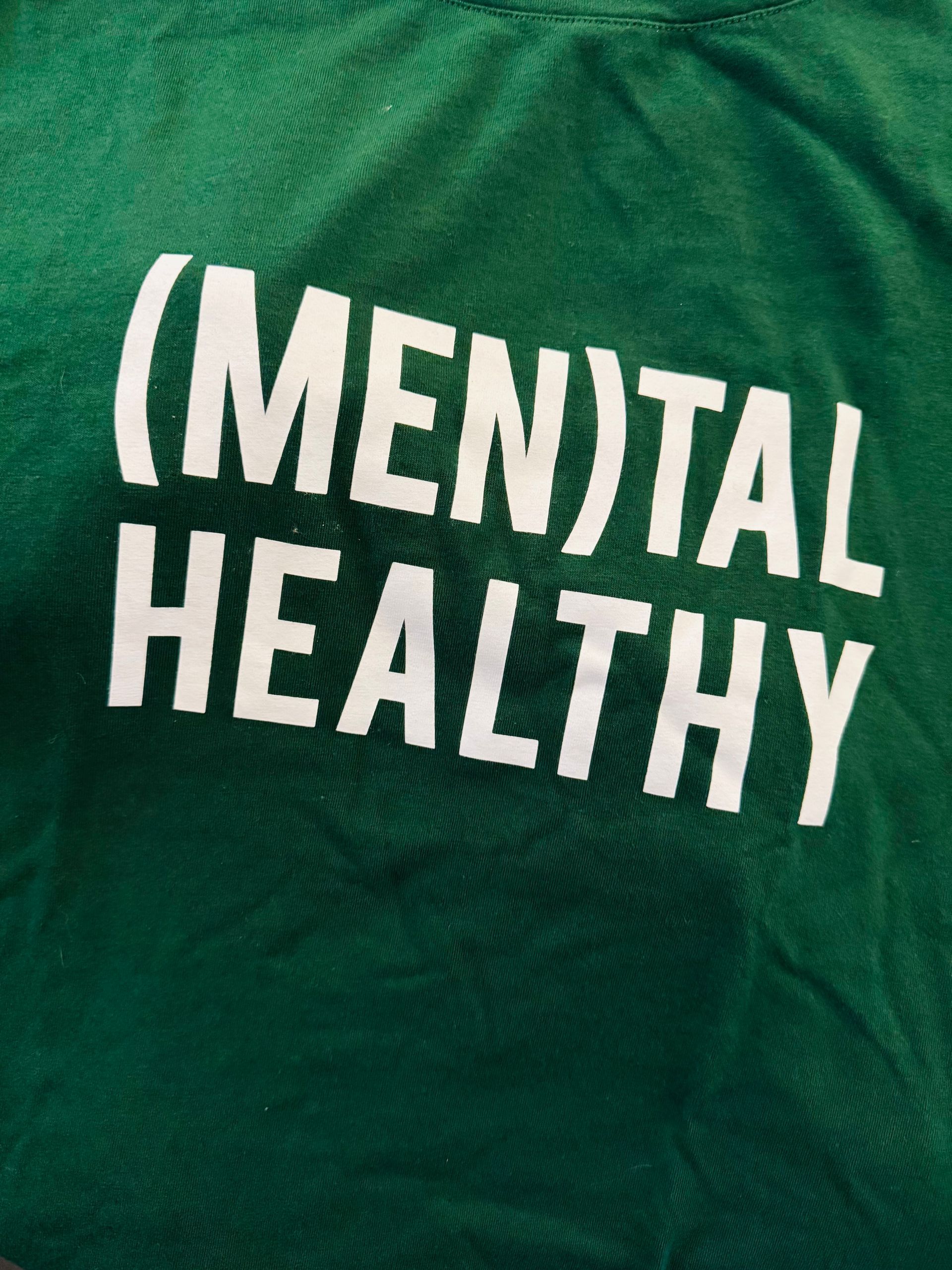
June: MENtal Health Awareness Month A Call to Action